

All Star Seoul: The Community Is Already Here
A Vision for What Brand Belonging Looks Like in K-Culture
Seoul’s creative communities — skaters in Seongsu, runners along the Han, musicians in Hongdae — aren’t waiting for a brand to lead them. They’re waiting for a brand that belongs with them. What does it look like when that brand finally arrives?
The final article in The K-Culture Playbook moves from framework to vision. Seoul’s creative communities already exist. The culture is already active. The creative districts already have personality and identity. For the right global brand, the path to K-culture genre status doesn’t start with a strategy. It starts with a decision: to show up, consistently, in the places where Seoul’s identity is being made.
The Difference Between a Brand That Is Present and a Brand That Belongs
There are plenty of global brands present in Seoul. They have Instagram channels. They run campaigns. They show up at pop-ups. Their products are available in the right stores. In any given week, a reasonably well-informed Seoul consumer could find their content without looking too hard.
And yet, they don’t belong.
The distinction matters more than it might initially seem. A brand that is present in a city is occupying space. A brand that belongs in a city is part of how people in that city think about themselves. It is referenced in conversations the brand isn’t part of. It appears in images the brand didn’t create. It becomes part of the vocabulary of identity that the community uses to describe its own world.
The All Star shoe has belonged to cultures before. To the basketball courts of the mid-twentieth century. To the punk scenes of the 1970s. To the grunge and indie movements of the 1990s. To art school studios and skateparks and music venues across decades and geographies.
The shoe was always more than a shoe. It was a signal — worn by people who didn’t follow culture, but made it.
Seoul’s creative communities are already doing exactly that. The question is not whether the brand belongs here. The question is whether the brand is ready to claim that belonging.
The Three Districts That Define Creative Seoul
Seoul is not a single cultural scene. It is a constellation of distinct creative communities, each anchored to a specific geography and defined by specific values, aesthetics, and social rituals.
Understanding these districts is the first step toward understanding where a brand with heritage, expressive DNA, and community roots can find its most natural home in this city.
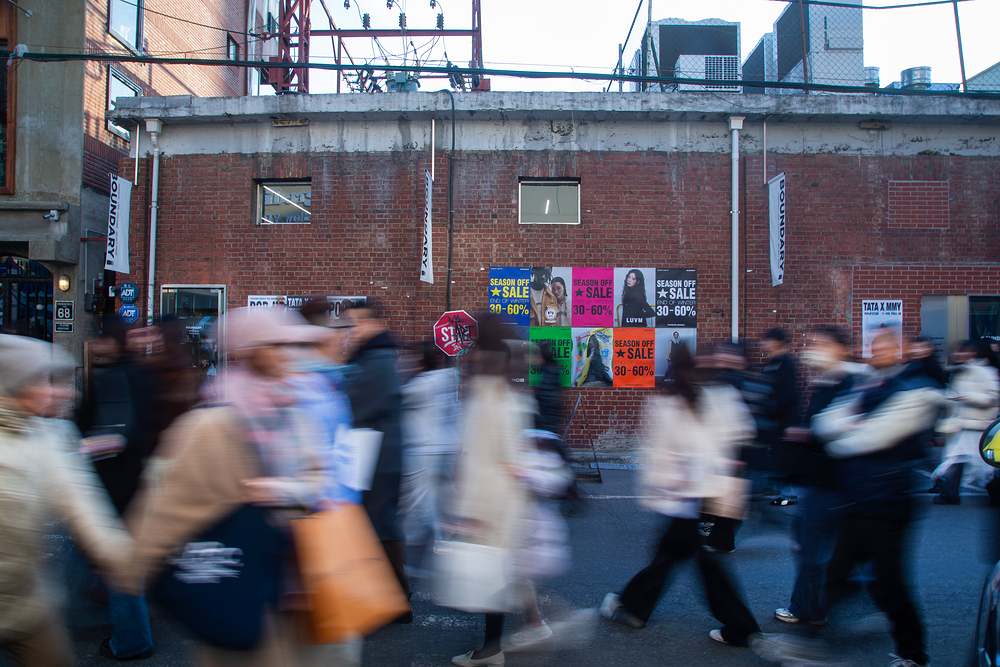
Seongsu-dong: Seoul’s Creative District
Seongsu-dong is the city’s most culturally active neighborhood — and the most strategically important address for global brands that want to signal cultural relevance. Its industrial aesthetic, originally shaped by the workshops and small factories that defined the area’s history, has become the visual language of Seoul’s independent creative class.
Galleries, creative studios, independent concept stores, and the city’s most-photographed brand activations all cluster here. On any weekend, the streets of Seongsu are full of Gen Z and millennial Seoulites who are simultaneously consuming culture and creating it — photographing, posting, evaluating, and moving on to the next thing.
Brands that activate in Seongsu are not just choosing a location. They are making a cultural statement about who they are and who they want to be connected to. The most successful activations here don’t feel like brands that have “chosen” Seongsu. They feel like brands that have always been part of this particular creative universe.
Hongdae: The Indie Music and Art Scene
Where Seongsu is characterized by visual culture and design, Hongdae is defined by sound — live music, independent artists, the particular energy of a neighborhood that has been Seoul’s indie music epicenter for decades.
Hongdae has its own aesthetic codes (looser, rawer, more DIY than Seongsu), its own community structures (centered around live music venues, art studios, and the kind of street culture that prefers authenticity over polish), and its own sense of identity. The community here is less interested in brand activations and more interested in whether the brand actually understands what Hongdae is.
For a brand with the right creative credentials, this is some of the most valuable cultural territory in Seoul — precisely because it is harder to enter and therefore less crowded with brand activity.
Han River: The Outdoor Living Room of Gen Z Seoul
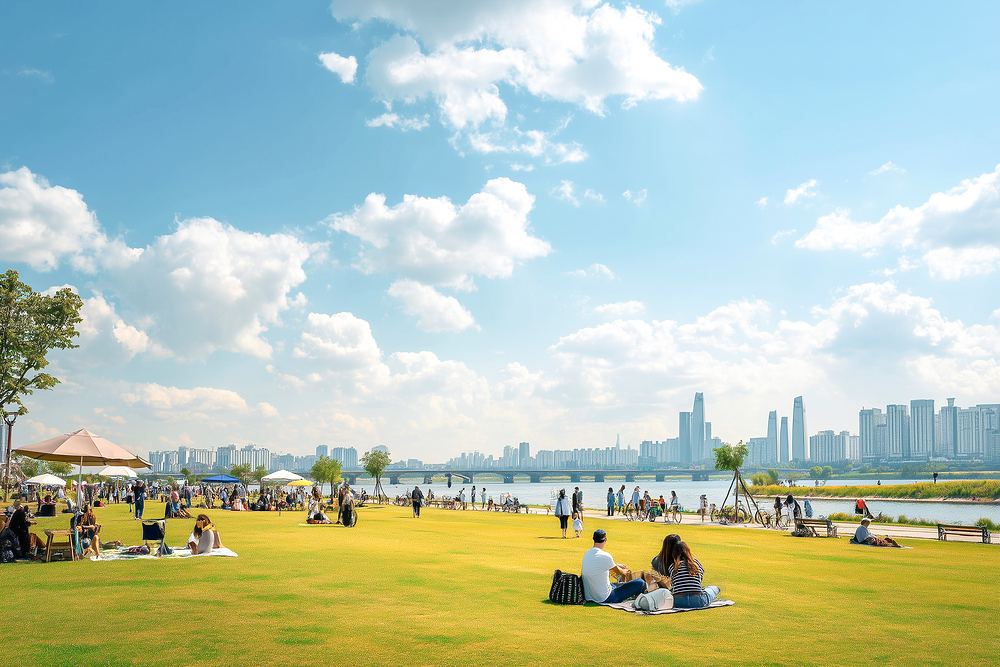
The Han River is not a park. It is a social infrastructure. Running crews meet here before dawn. Night cyclists trace the riverside paths after midnight. Picnic communities form and reform with the seasons. The Han River circuit is where Seoul’s Gen Z has built its most visible community rituals — and it is increasingly where brands are discovering that active lifestyle culture and fashion culture are the same thing.
The crossover moment that the Han River represents is significant: a brand that belongs to the Han River’s community of active, expressive, identity-conscious young Seoulites has access to one of the city’s fastest-growing cultural spaces — one that connects naturally to global trends in outdoor lifestyle while remaining distinctly, specifically Korean.

What Brand Belonging Actually Looks Like: A Vision
It’s one thing to identify the right communities. It’s another to imagine what sustained, genuine belonging in those communities looks like over time.
The vision is not a single activation. It is a living presence across the city’s creative districts — each chapter connected to the others, each building on what the previous one established.
In Seongsu-dong,
the brand has a recurring physical presence — not a one-time pop-up, but a space that the community comes to know as a genuine cultural address. The space hosts artist collaborations that change with the seasons. Customization workshops that bring participants together around a shared creative act. Partnerships with independent designers and cultural organizers who already have the community’s trust. The space becomes part of the Seongsu map — a place that locals recommend and visitors seek out.
In Hongdae,
the brand enters through music — through genuine partnerships with the artists, venues, and labels that define the scene. Not sponsorships. Partnerships. The brand’s presence at music events is not promotional. It is participatory. The brand becomes part of the community’s cultural memory, associated not with a campaign moment but with experiences that people genuinely remember.
Along the Han River,
the brand is part of the active lifestyle community’s rituals — not as a performance sponsor, but as a community member. Running events, night cycling crews, riverside community gatherings. The brand shows up where the community shows up, consistently enough that its presence stops being remarkable and starts being expected. Expected presence is the first stage of belonging.
Across all three districts, the amplification system is active: earned media from editorial accounts that follow the creative scene, creator content from the participants in each activation, community-generated documentation that builds the archive of what the brand means in Seoul. Not manufactured. Not pushed. Simply captured, because the experiences are worth capturing.
Why This Path Is Shorter Than It Looks
For global brands accustomed to thinking about cultural market entry in terms of years of patient investment, the idea of deep community embedding in Seoul can feel like a very long road.
It is worth noting that, for a brand that is already operating in the market, the road is shorter than it appears. The reason is this: the communities are already there. The creative districts already have their identities, their social structures, their trusted voices. The infrastructure for cultural embedding already exists.
What the brand needs to provide is not the community. It is the consistent, culturally specific presence that gives the community a reason to include the brand in its world.
This is fundamentally different from markets where the brand has to build the community from scratch. In Seoul, the community is already here. The brand’s job is to show up — specifically enough, consistently enough, and humbly enough — to be invited in.
The brands that have achieved this in Seoul did not do it with unlimited budgets. They did it with a specific point of view, a genuine understanding of the communities they were entering, and the discipline to sustain their presence through the periods when the results weren’t immediately visible.
The Strategic Imperatives, Revisited
Throughout this series, we’ve introduced a framework: the three drivers of Discovery, Engagement, and Amplification. But the framework only works if it is built on top of the four strategic imperatives that set the direction.
Build systems, not campaigns.
A one-time Seongsu activation does not build a Seongsu brand. A sustained presence, rotating with the cultural seasons, building relationships that compound over time — that builds a brand.
Control demand signals.
Belonging in a cultural community is partly about managing how the brand is perceived — keeping scarcity alive where it creates desire, creating the conditions for organic conversation rather than broadcasting into silence.
Invest in community.
Every artist collaboration, every customization workshop, every community event is an investment in the people who will distribute the brand’s story without being asked to. Community investment is the highest-return marketing investment available in Seoul.
Value over trend.
The communities we’ve described in this series are deeply skeptical of brands that chase what’s hot this season and abandon it the next. They can feel the difference between a brand that has genuine convictions and a brand that is performing relevance. The brands that belong in Seoul’s creative districts are the ones that stand for something durable — and let the communities come to them.
A Final Thought on Genre Status
We began this series with a question: how does a brand become a K-culture genre?
The framework provides a path. The cases provide evidence. The strategic imperatives provide direction. But the deepest answer to the question is simpler than all of that.
Genre status comes when the community decides that the brand’s story is also their story. When they start using the brand not to signal what they bought, but to signal who they are. When media and culture reference the brand not because they were paid to, but because the brand has become part of the shared cultural vocabulary.
That moment is not manufactured. It is earned, slowly and deliberately, through the accumulation of genuine presence, genuine relationships, and genuine cultural contribution.
Seoul’s creative communities — in Seongsu, in Hongdae, along the Han River, and in the dozens of other microcultures we haven’t named in this series — are already doing the work of making culture. They are already creating the aesthetic, the conversation, the identity that the next generation of global consumers will want to be part of.
They are not waiting for a brand to lead them. They are waiting for a brand that belongs with them.
That brand could be yours. And we are ready to help you prove it.
This is the final article in The K-Culture Playbook, a five-part series by HyperM on how global brands build lasting cultural presence in Seoul. HyperM is a Seoul-based strategic marketing agency with 24 years of experience working with global brands in the Korean market. If you’re thinking about what your brand’s Seoul strategy could look like, we’d love to have that conversation. Contact: Enquiry@hyperm.co.kr