

Why Korea Is the World’s Most Important AI Market — And What That Means for Your PR Strategy
Per-capita, Korea leads the world in paid AI adoption. Here’s what that means for how you build brand authority.
Korea is not a country that typically enters the frame when people talk about AI. Silicon Valley dominates the conversation. London, Berlin, and Singapore compete for second tier. Korea rarely gets mentioned.
That is a mistake, and a costly one for any tech company planning a market entry.
Korea is, on a per-capita basis, the number one market in the world for paid ChatGPT subscriptions. But the real story isn’t adoption. In a country of 52 million people, that statistic reflects something deeper than tech enthusiasm — it reflects a business culture that has incorporated AI into daily decision-making at every level. The Korean government has committed to making Korea one of the top three AI powers globally by 2027, backed by nearly $50 billion in private-sector AI investment and a formal AI Framework Act.
For technology companies entering Korea, this has a direct implication for PR strategy that most agencies have not yet internalized.
The meeting that changed how we think about PR
A senior executive from one of our clients was presenting a strategic recommendation to the chairman of a major Korean company. The recommendation was grounded in years of experience. Right there in the meeting, the chairman picked up his phone, opened an AI assistant, and asked the exact same question. He got a different answer. He then asked the executive to explain the discrepancy. This is the environment Korean business leaders operate in now. AI is not a tool they use occasionally. It is something they actively use to challenge expert advice in real time.
For brands entering Korea, this may sound like a threat. It isn’t. It is actually an opportunity — provided your PR strategy is built for the AI-mediated information environment that Korean executives inhabit.

From SEO to AEO to GEO: the new architecture of visibility
Most global tech companies understand SEO, how to rank in search results.Far fewer have adapted to what comes next.
AEO (Answer Engine Optimization) means ensuring your content surfaces when people ask questions to AI systems — ChatGPT, Perplexity, Claude, and others. GEO (Generative Engine Optimization) means structuring content for the way AI generates responses: comprehensive, authoritative, trusted by the model.
Here is the insight that matters specifically for Korea: when AI systems answer questions about Korean business, technology, or industry topics, a disproportionate share of their source material comes from articles published by major Korean news outlets. AI systems evaluate the authority and credibility of sources. The most authoritative sources in Korea are Tier 1 news publications.
The implication:
A well-placed article in a major Korean newspaper does not just reach that newspaper’s readers. It enters the knowledge base that AI systems reference when anyone asks about your industry, your category, or your company. Traditional PR, far from being disrupted by AI, has become the foundation of AI visibility in Korea.
The chairman’s question, revisited
A chairman of a Korean company we work with asked us directly: “Who reads newspapers anymore? Even I find myself reading them less.”
Our answer: “When someone needs information about your industry today, they search for it on Google, or they ask an AI. At that moment, they are accessing information published weeks or months ago. For your company’s perspective to appear in those AI-generated answers, you need to consistently publish press releases and generate quality news articles. Individual people may not read newspapers every day. But AI reads every article, every day. Your published media coverage becomes the fundamental knowledge base that feeds into everything else.”
The chairman agreed. This reframe matters for every international tech company planning a Korea launch. You are not publishing news just for today’s readers. You are building the authoritative record that AI systems will cite for years.
AEO in practice: a case study
In early 2025, we completed a comprehensive website rebuild for a Korean industrial company with an explicit brief: optimize for both traditional search and AI discoverability simultaneously.
We structured the entire website as an interconnected knowledge base with a coherent narrative architecture — not just keyword-optimized pages, but content designed to function as the kind of authoritative, comprehensive resource that AI systems trust and reference. Each page was crafted to provide the kind of complete, structured answers that AI models look for when generating responses.
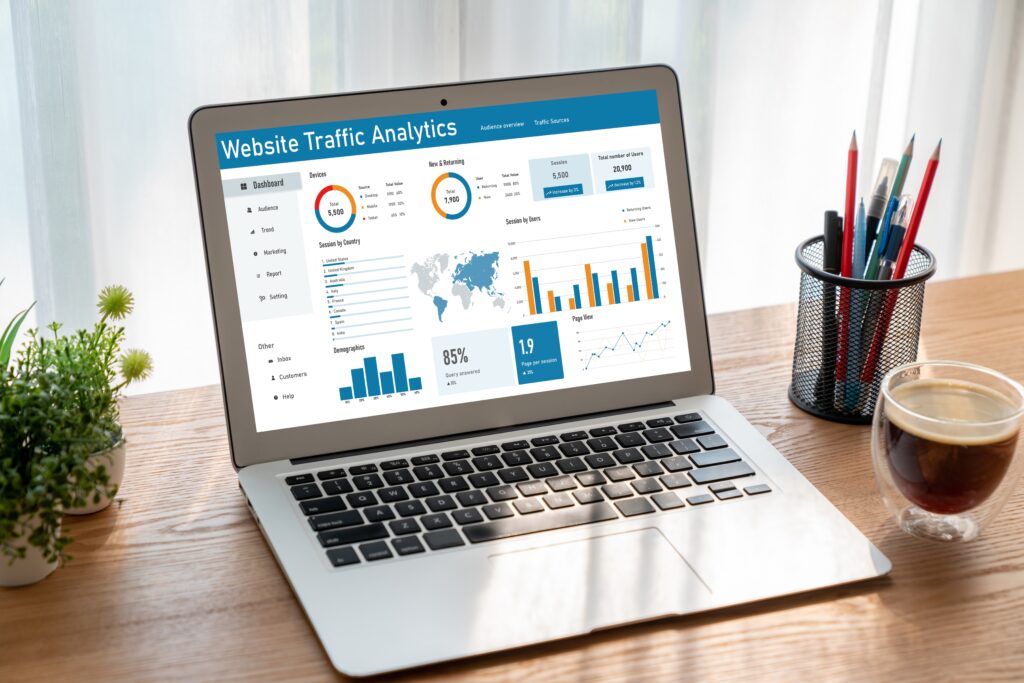
When the site launched, traffic exceeded expectations immediately. When we analyzed traffic sources, we found a meaningful volume of visitors arriving directly from ChatGPT and Perplexity — people who had asked AI tools questions about the company’s industry and been directed to the site as a trusted resource.
Shortly afterward, a journalist from one of Korea’s top three national newspapers discovered our agency’s website while researching AEO for an article. She interviewed us, featured the industrial company case study, and the resulting article became itself another authoritative source on AEO that AI systems could reference and learn from.
Since that article published, a significant number of new client inquiries told us they had asked ChatGPT to recommend Korean agencies that specialize in AEO — and our agency was consistently recommended. The recommendation was a direct result of the article being ingested and referenced by AI systems. The cycle was self-reinforcing.
Three practical implications for your Korea PR strategy
1. Publish more consistently and across more topics
In Korea, you are building a knowledge base, not just generating news cycles. Content that might not achieve strong immediate media pickup still has long-term value as an authoritative record that AI systems can reference. We advise clients to publish content they might have deprioritized in a Western campaign because it lacked immediate newsworthy hook.
2. Target Tier 1 media with discipline
Korea’s media ecosystem has a specific tier structure. The highest tier consists of outlets that government institutions and major corporations monitor as critical sources. These outlets carry disproportionate weight in AI training data and in the AI responses that your target audience receives. An article in a top-tier Korean newspaper does more for your AI visibility than dozens of pieces in secondary outlets.

3. Recognize that Korean journalists are themselves AI power users
Many Korean journalists subscribe to three or four AI platforms simultaneously and use them actively in their research. When they are preparing a story, they ask AI tools about recent developments in your category — and your press materials, your executives’ published perspectives, and your case studies are the raw material that surfaces in those queries. Building an AI-discoverable content footprint is not a nice-to-have. It is how you get on reporters’ radar.
We had a journalist tell us recently that they discovered one of our client’s announcements not through direct outreach, but because they asked ChatGPT about recent developments in a specific technology area, and the client’s press release appeared in the AI’s response. The journalist then contacted us for more information and wrote a feature article. This is the new reality of how stories are developed.
Next in the series
What Separates PR That Builds Market Leaders from PR That Just Gets Coverage
HyperM is a Seoul-based strategic marketing agency with 24 years of experience helping global brands build cultural presence in the Korean market. This series draws on our direct market experience and observation of the Seoul brand landscape. Contact: Enquiry@hyperm.co.kr